
 01905 905 503
 james@wearecapitan.co.uk


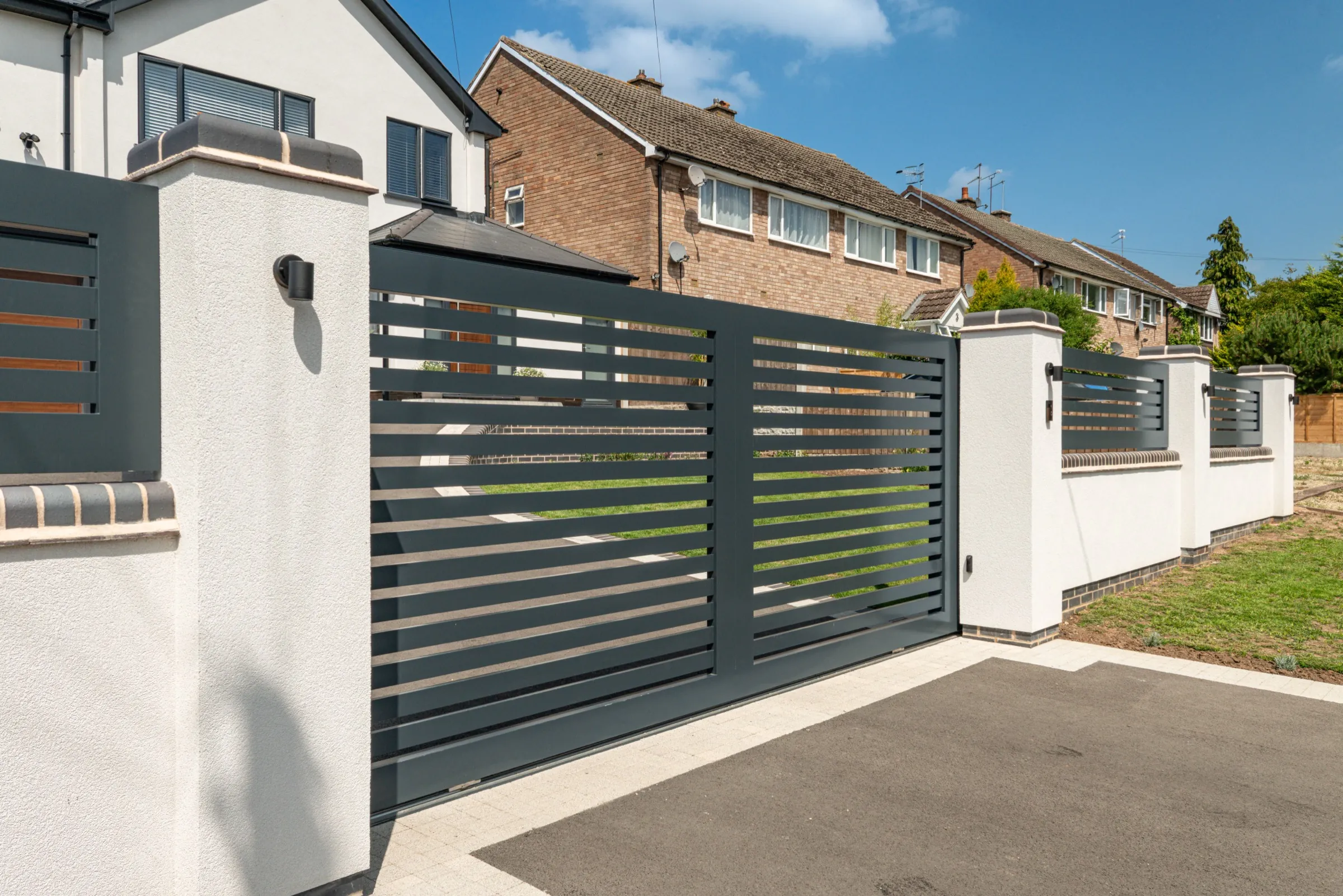
If you’re choosing between aluminium and steel for a new set of electric driveway gates, the honest answer is that both are excellent materials — but they’re excellent at different things. The right choice depends on what you want the gates to do, where they live, and how much maintenance you’re prepared to take on over a 20-year ownership.
This is the comparison we walk every homeowner through at the design-and-quote stage. It’s worth reading before you make the decision, because the difference between the two materials shows up most clearly five or ten years in — long after the install is complete.
The short answer
Aluminium is the right choice for most modern residential driveways. It’s lighter, doesn’t rust, takes any colour you want, and needs almost no maintenance. Lifespan with a quality powder-coat is 25 years or more.
Steel is the right choice when security or weight is the driving requirement — large estate gates, commercial properties, anywhere the gate itself needs presence. It’s heavier, stronger under impact, but needs ongoing care to keep rust at bay.
If you want the detailed reasoning, here it is.
Weight and what it means for your driveway
A typical aluminium driveway gate leaf weighs roughly half what an equivalent steel leaf weighs. For a 3m-wide double gate, that’s the difference between automation handling 80kg per leaf versus 160kg per leaf.
That weight difference compounds across the lifetime of the install:
- Lighter loads on the automation system — aluminium gates put less stress on hinges, motors and gearboxes, which extends service intervals and reduces the chance of mid-life mechanical failure
- Less civil work at install — steel gates often need deeper foundations and heavier post construction to handle the load, which adds to the install cost
- Smoother operation — lighter gates open and close faster, which matters when you’re sitting on the driveway waiting in the rain
Steel’s weight isn’t always a disadvantage. Heavier gates feel more substantial, hold their position better in high winds, and offer more deterrent value just by being harder to push. For a large rural property with exposed driveway access, that weight is part of what you’re paying for.
Lifespan and the rust question
This is where the materials genuinely diverge.
Aluminium does not rust. It oxidises, but the oxide layer is microscopic and actually protects the metal underneath. A powder-coated aluminium gate installed today will look broadly the same in 25 years — same colour, same finish, no corrosion.
Steel rusts. Every steel gate is in a slow fight with the British climate. The fight is winnable with the right specification — galvanised then powder-coated steel can last 20-30 years before significant intervention — but the fight is real, and it requires ongoing care. A neglected steel gate will start showing rust at weld points and contact wear within 5-7 years.
For coastal properties or anywhere salt is in the air, the gap widens further. Aluminium handles salt without complaint; steel needs marine-grade specification and more frequent maintenance.
Finish options
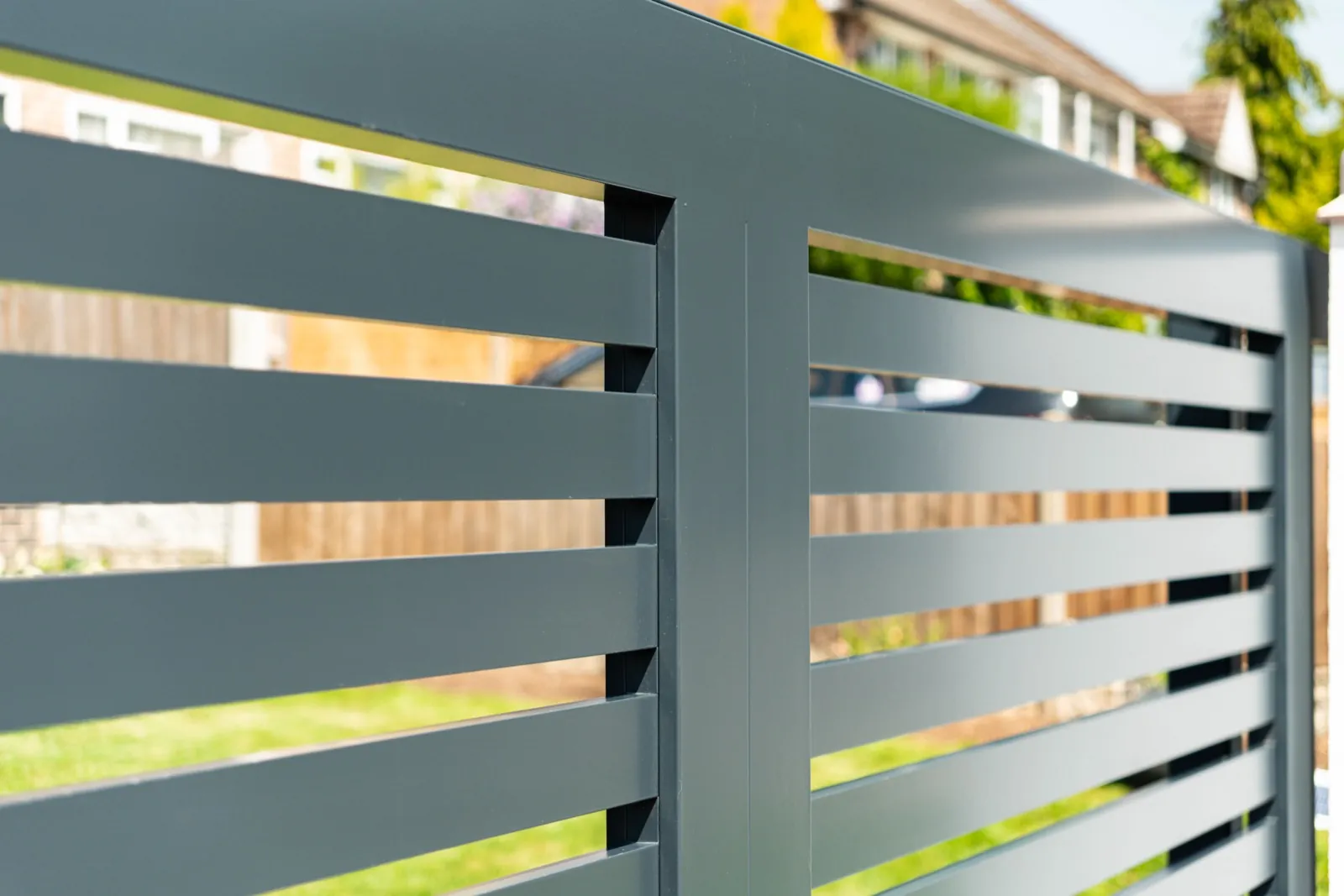
Both materials accept powder-coat finishes in any RAL colour, and both can be made to look traditional or contemporary. But there are practical differences:
- Aluminium holds powder-coat exceptionally well. The smooth extruded surface gives a uniform finish, and because the metal doesn’t rust underneath, the finish stays intact for decades. Available in matte, satin or gloss; wood-grain effect coatings; and metallic finishes including bronze, copper and anthracite
- Steel can be finished the same ways but the finish is doing more work — it’s protecting the metal underneath as well as colouring it. Damage to the powder-coat exposes raw steel that will start to rust. For traditional wrought-iron styling, polished or hand-forged details, steel still has the edge
If your design brief is contemporary — flat panels, horizontal slats, clean lines, anthracite or muted modern colours — aluminium does this better and lasts longer doing it. If your design brief is traditional — ornamental scrollwork, finials, period styling for a Georgian or Edwardian property — steel is usually the right material for the look.
Security
Both materials make secure gates. The security difference is at the margins:
- Steel is harder to cut, more resistant to ramming, and intimidates more by appearance. For commercial sites, high-value properties, or anywhere the gate is part of a serious security strategy, steel is still the default choice
- Aluminium is plenty secure for residential use. A powder-coated aluminium gate is not something an opportunist will defeat — it’s the combination of the gate, the automation system, the locking mechanism and the perimeter that determines real-world security, not the metal alone
In practice, for a typical residential property, the gate isn’t the weakest link in your security — it’s the wall or fence either side of it, the visibility from the road, or the gap underneath. Either material is more than enough for residential deterrence.
Maintenance
This is where aluminium pulls clearly ahead for homeowners who’d rather not think about their gates after they’re installed.
| Task | Aluminium | Steel |
|---|---|---|
| Rust inspection | Not required | Annual visual check; touch-up every 2-3 years |
| Repainting | Not required for 20+ years | Repaint or re-powdercoat at 10-15 years |
| Hinge service | Every 2 years | Annual (heavier loads) |
| Cleaning | Wipe down, mild detergent | Same, plus check for paint chips |
Steel isn’t difficult to maintain — but it does need maintaining. Aluminium effectively doesn’t.
Cost
For equivalent design and size, aluminium and steel sit in broadly similar bands. The cost differences usually come from elsewhere:
- Steel costs more in heavier specifications — large estate gates, ornamental detailing, hand-forged elements add cost that aluminium can’t match because aluminium can’t be worked the same way
- Aluminium costs more in the install if you’ve chosen designs that need bespoke fabrication — though most contemporary aluminium designs use standard extrusions which are efficient to produce
Over a 20-year ownership window, aluminium often comes out cheaper despite a similar upfront price, because the maintenance cost is materially lower.
We give every customer an honest indicative cost band at the design stage rather than try to fit your gate into a fixed package. The variables that matter more than material — size, automation specification, civil works, controls — drive most of the price difference.
Comparison at a glance
| Feature | Aluminium | Steel |
|---|---|---|
| Weight (per leaf) | Lighter (~50% of steel) | Heavier |
| Lifespan | 25+ years | 20-30 years with maintenance |
| Rust | Does not rust | Will rust without care |
| Finishes | Any colour, wood-grain, metallic | Any colour, traditional / forged styling |
| Security | Excellent for residential | Stronger; default for commercial |
| Maintenance | Minimal | Annual inspection, periodic re-coat |
| Coastal suitability | Excellent | Needs marine-grade spec |
| Best for | Modern residential driveways | Estate gates, traditional styling, commercial |
Which is right for your driveway?
For most modern residential driveways in Worcestershire and the West Midlands, aluminium is the material we recommend by default — it’s lighter on the automation, doesn’t rust, and looks the same in 2046 as it does in 2026.
For estate properties, traditional styling, commercial sites, or anywhere the gate itself needs presence and weight, steel is still the right call.
The honest version: most of the visual styles you’ll see in property magazines are achievable in either material. The difference is what happens after the gates are installed — how they wear, how often they need attention, and how they look in their second decade. That’s the conversation we have with every customer at the design stage, and it’s worth having before you sign off on a quote.
To see how these materials work in practice:
- Browse our aluminium driveway gates range
- Browse our steel driveway gates range
- Read our Essex Drive automated steel swing gates installation case study
Or get in touch for an honest conversation about which material is right for your property. We design, manufacture and install every gate ourselves at our Droitwich workshop — and we’d rather talk you out of the wrong material than sell you a gate that won’t suit you in five years.